PERFORMING
SUNDAY–MONDAY
1/2 2025 23:59
UdK, Nizza Berlin, various locations
Installation: Mascha Naumann
Concept and text: Mascha Naumann, xan egger
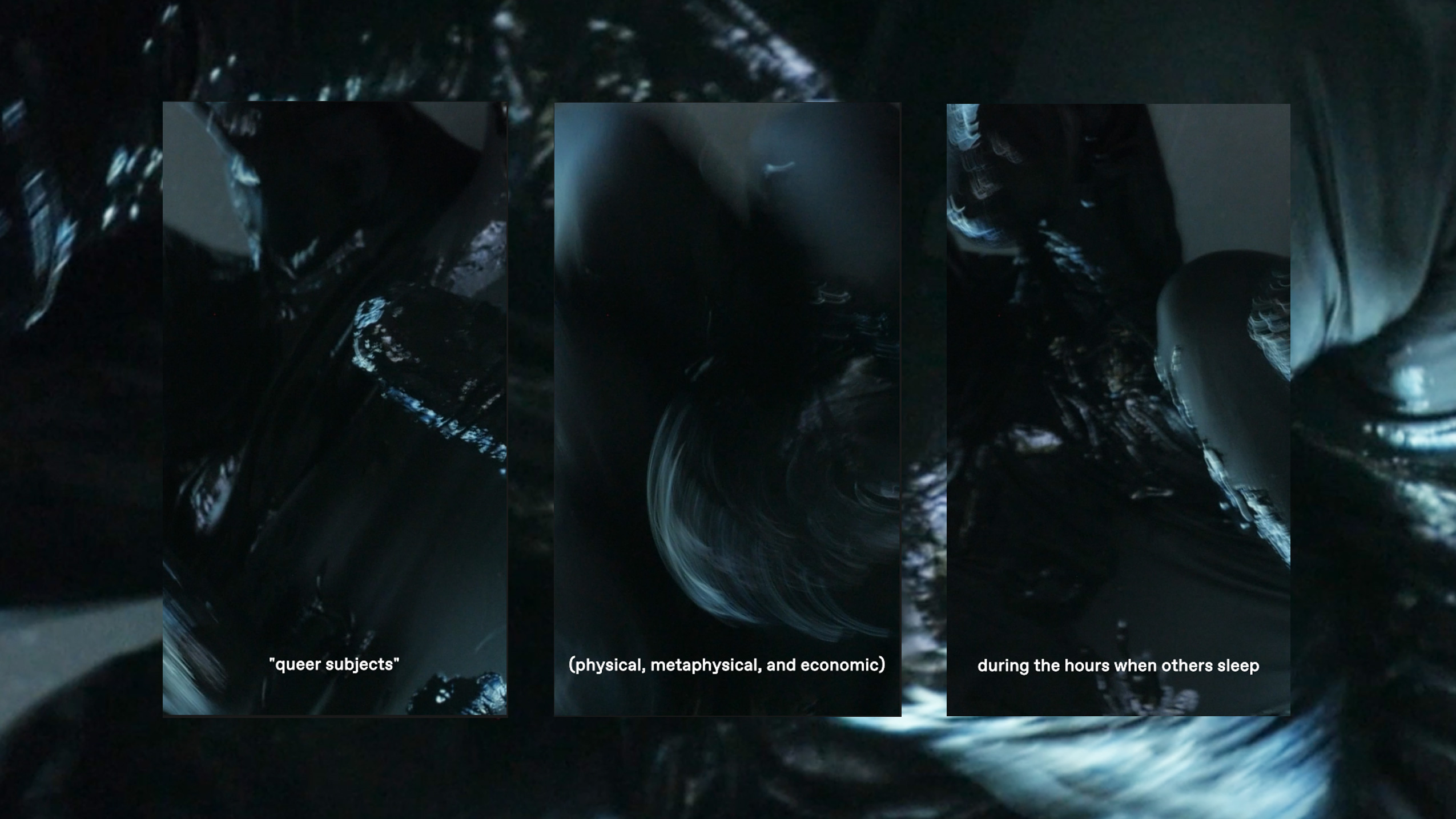
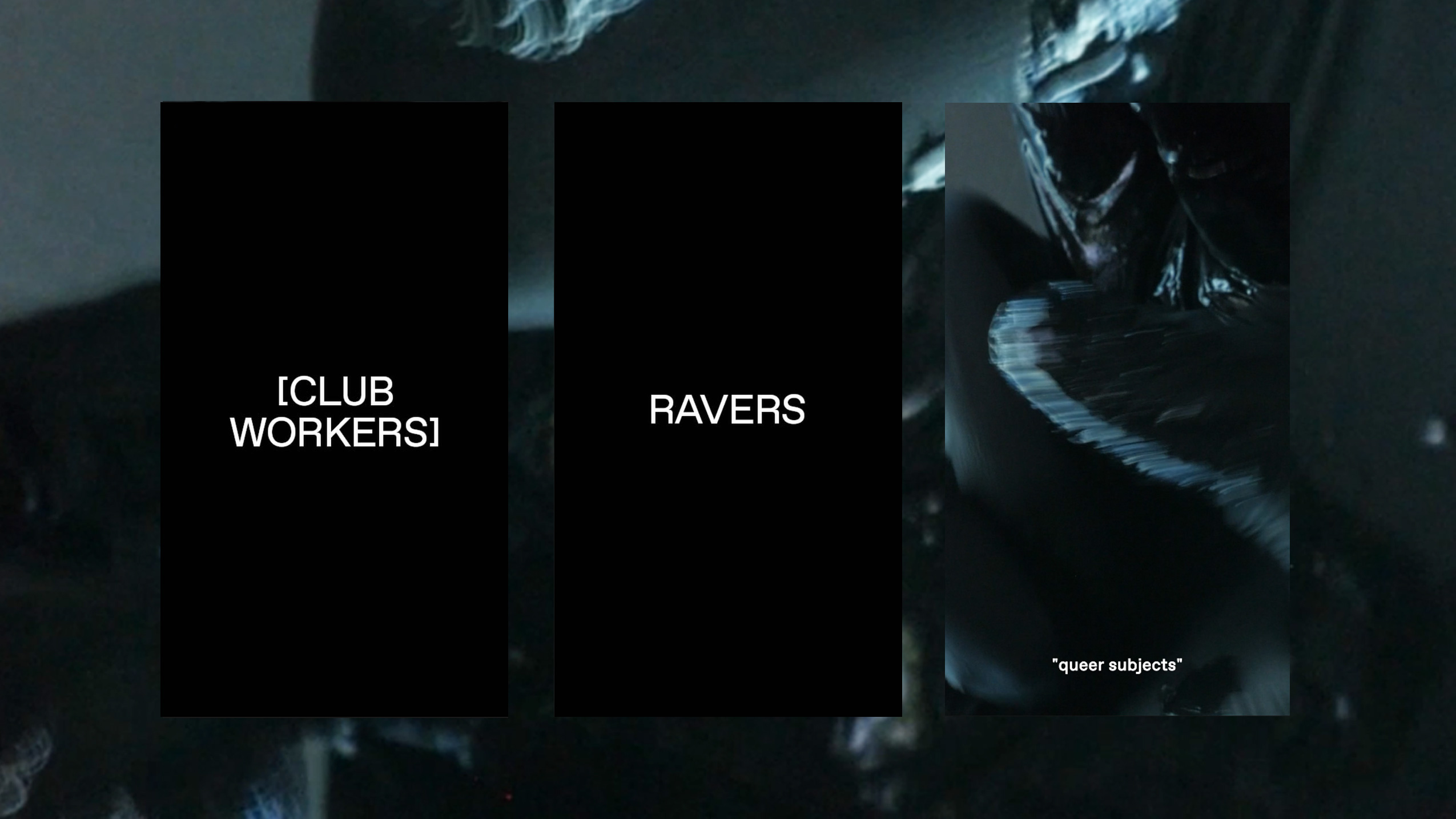
J. Jack Halberstam, In a Queer Time and Place: Transgender Bodies, Subcultural lives: ‘[...] they also often live outside the logic of capital accumulation: here we could consider [club workers], ravers, club kids, HIV-positive barebackers, rent boys, sex workers, homeless people, drug dealers, and the unemployed. Perhaps such people could productively be called "queer subjects" in terms of the ways they live (deliberately, accidentally, or of necessity) during the hours when others sleep and in the spaces (physical, metaphysical, and economic) that others have abandoned, and in terms of the ways they might work in the domains that other people assign to privacy and family.’ (2005, p. 10).
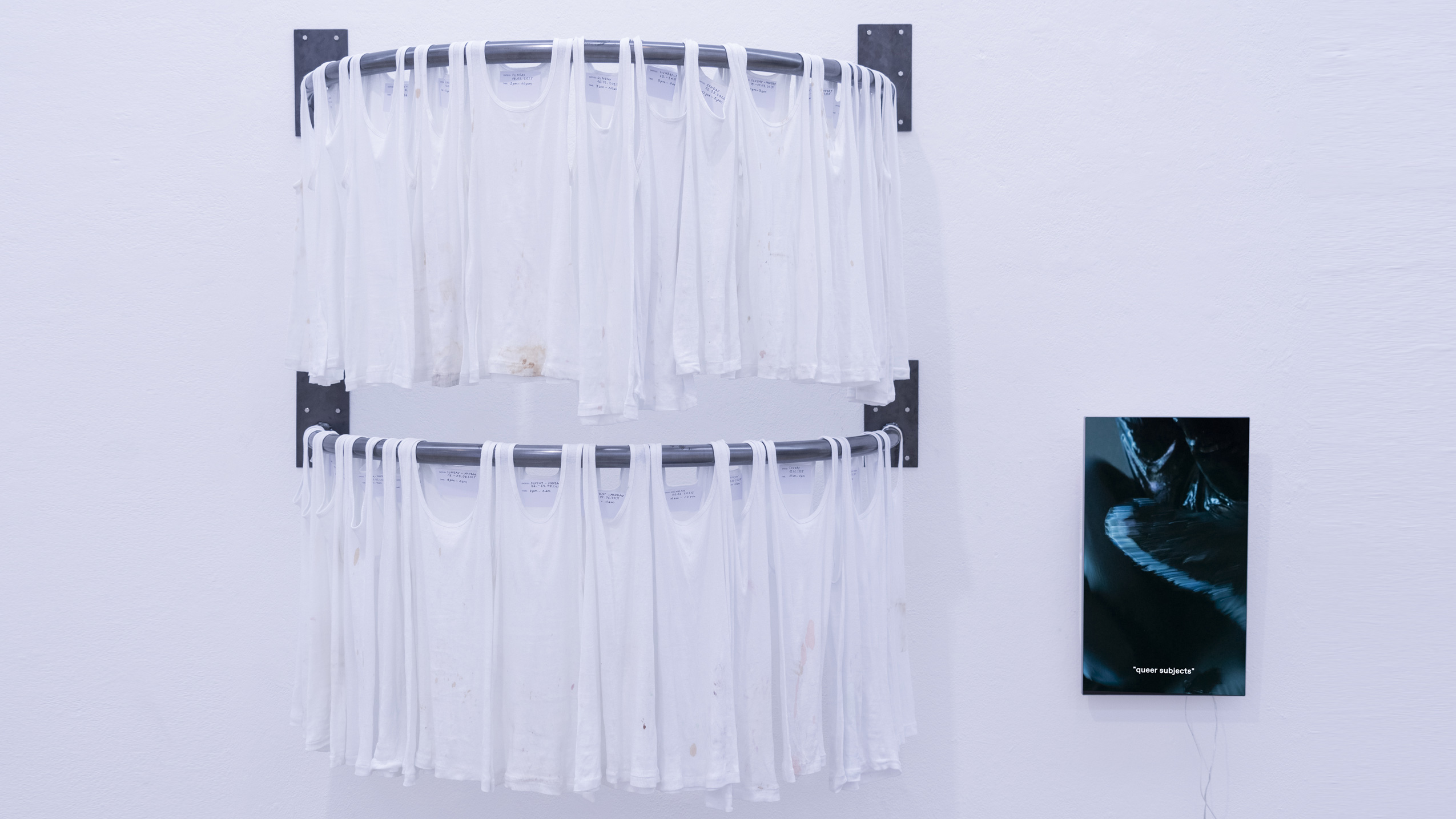
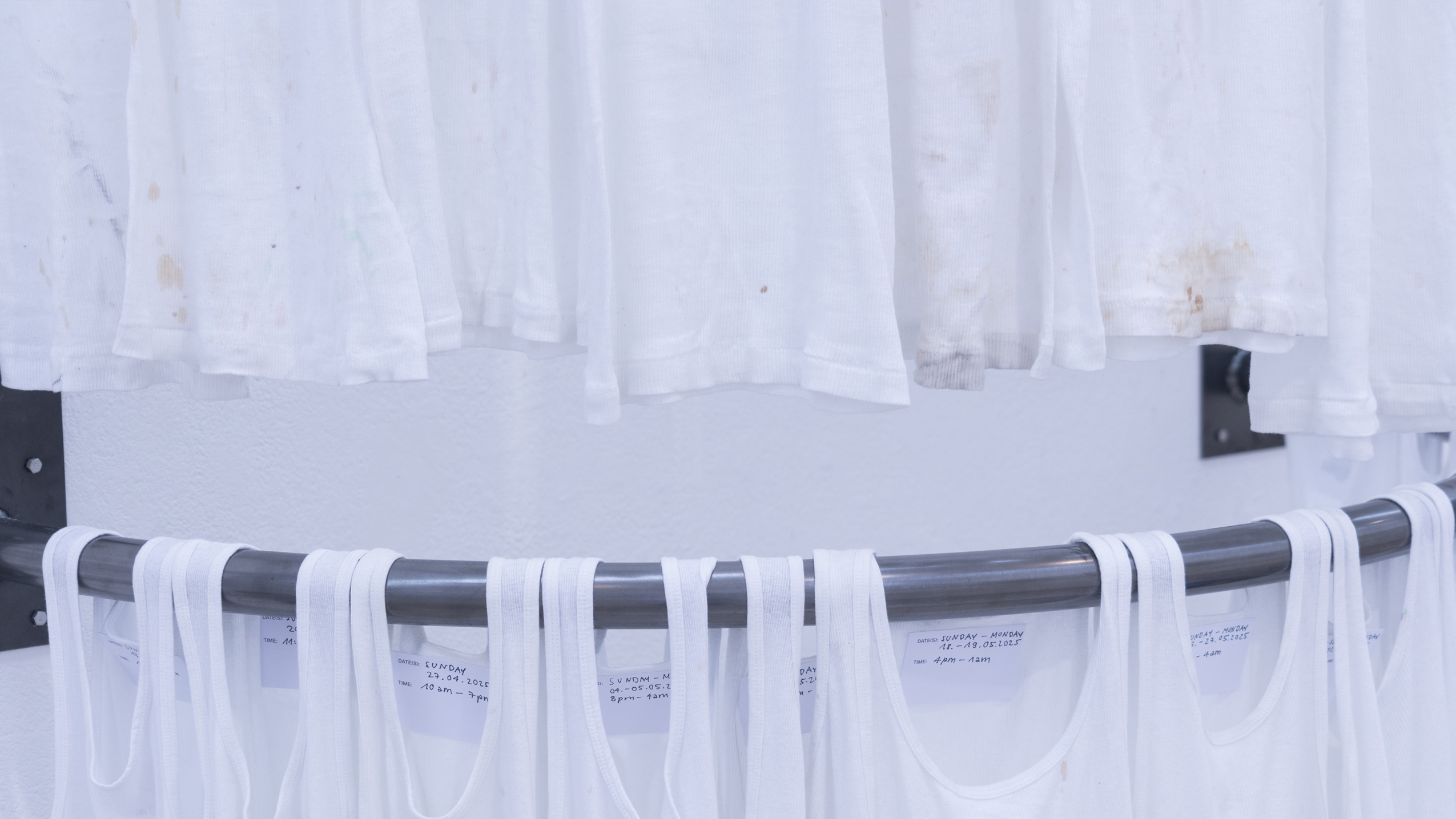
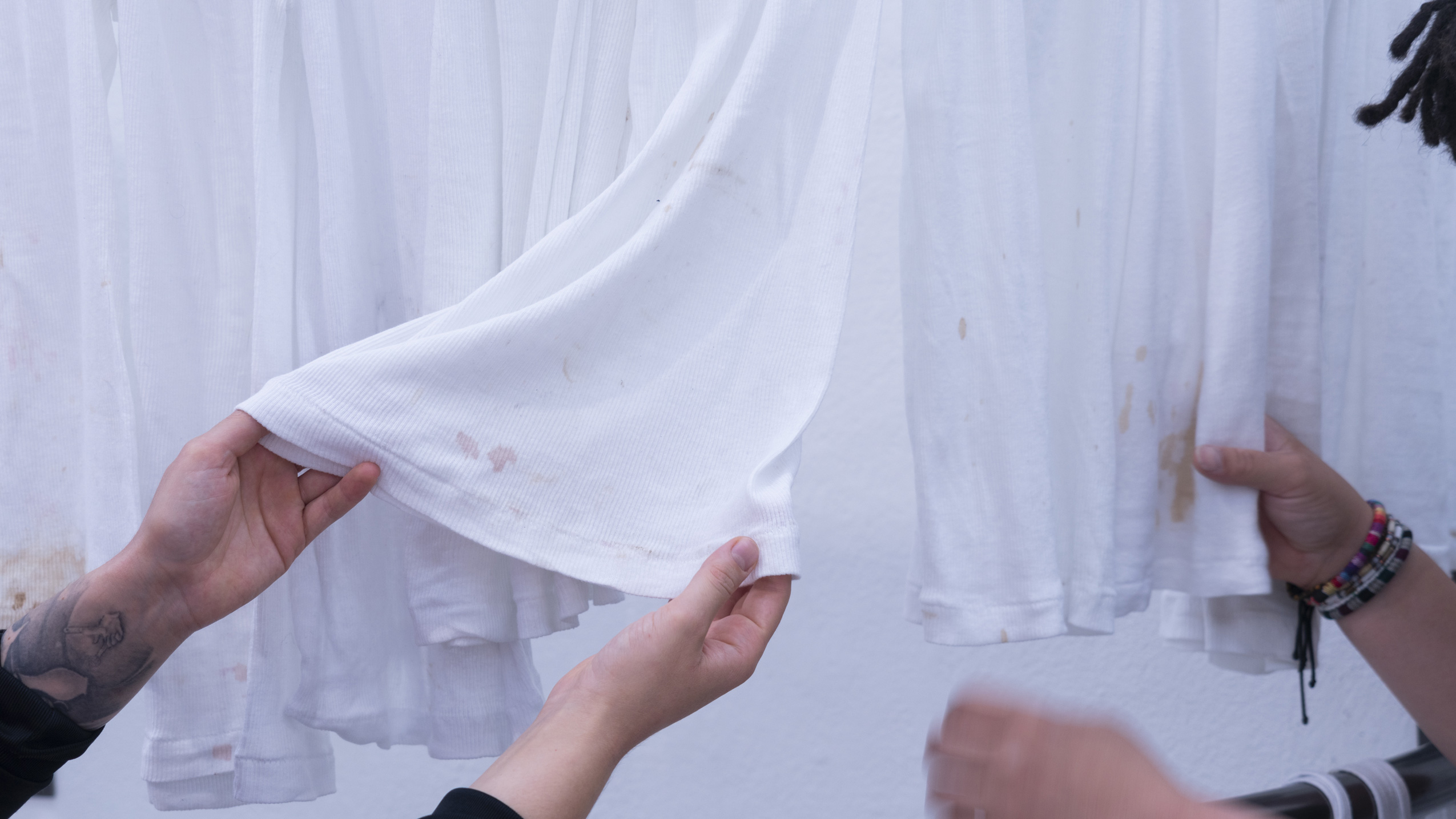
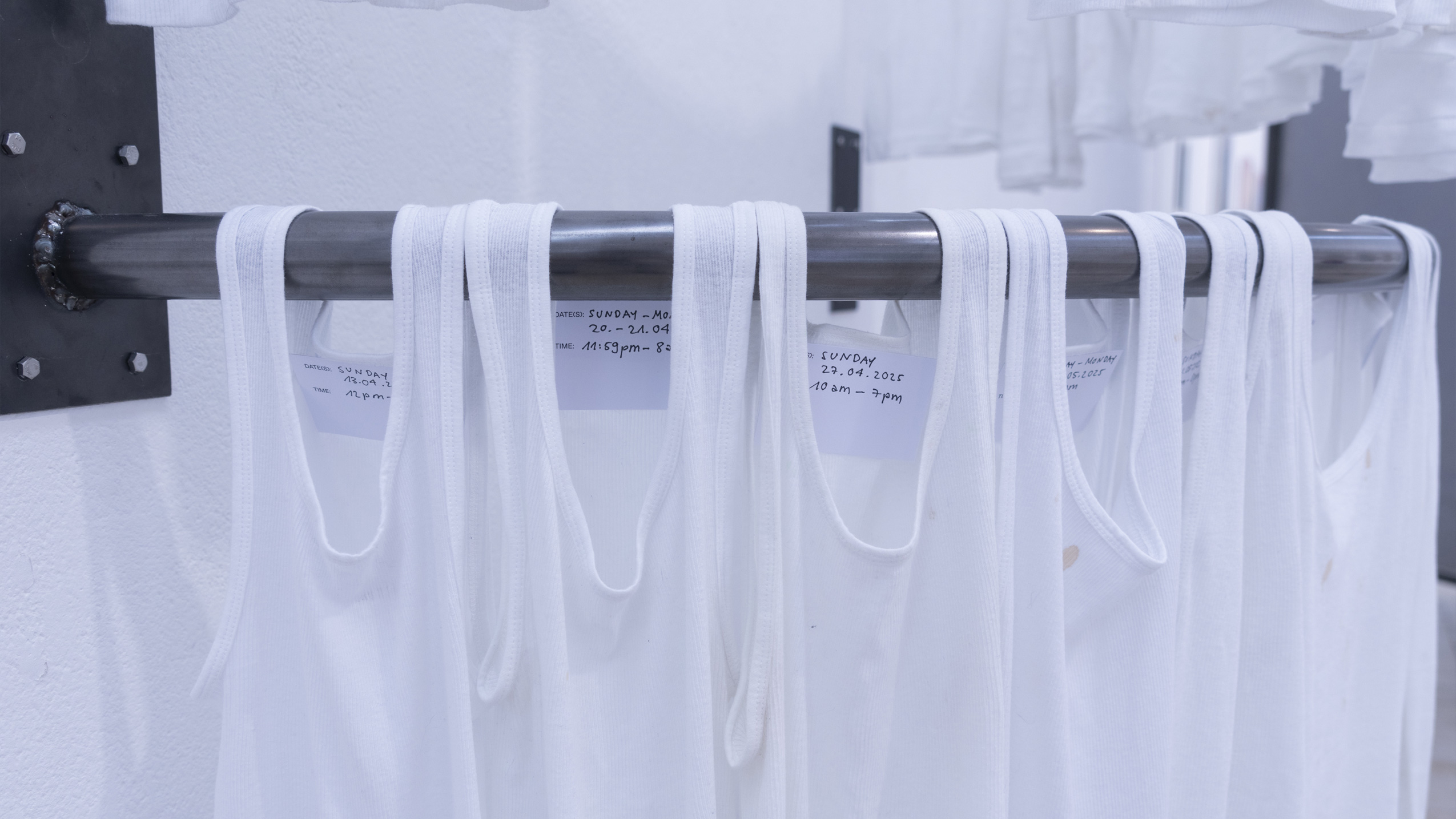
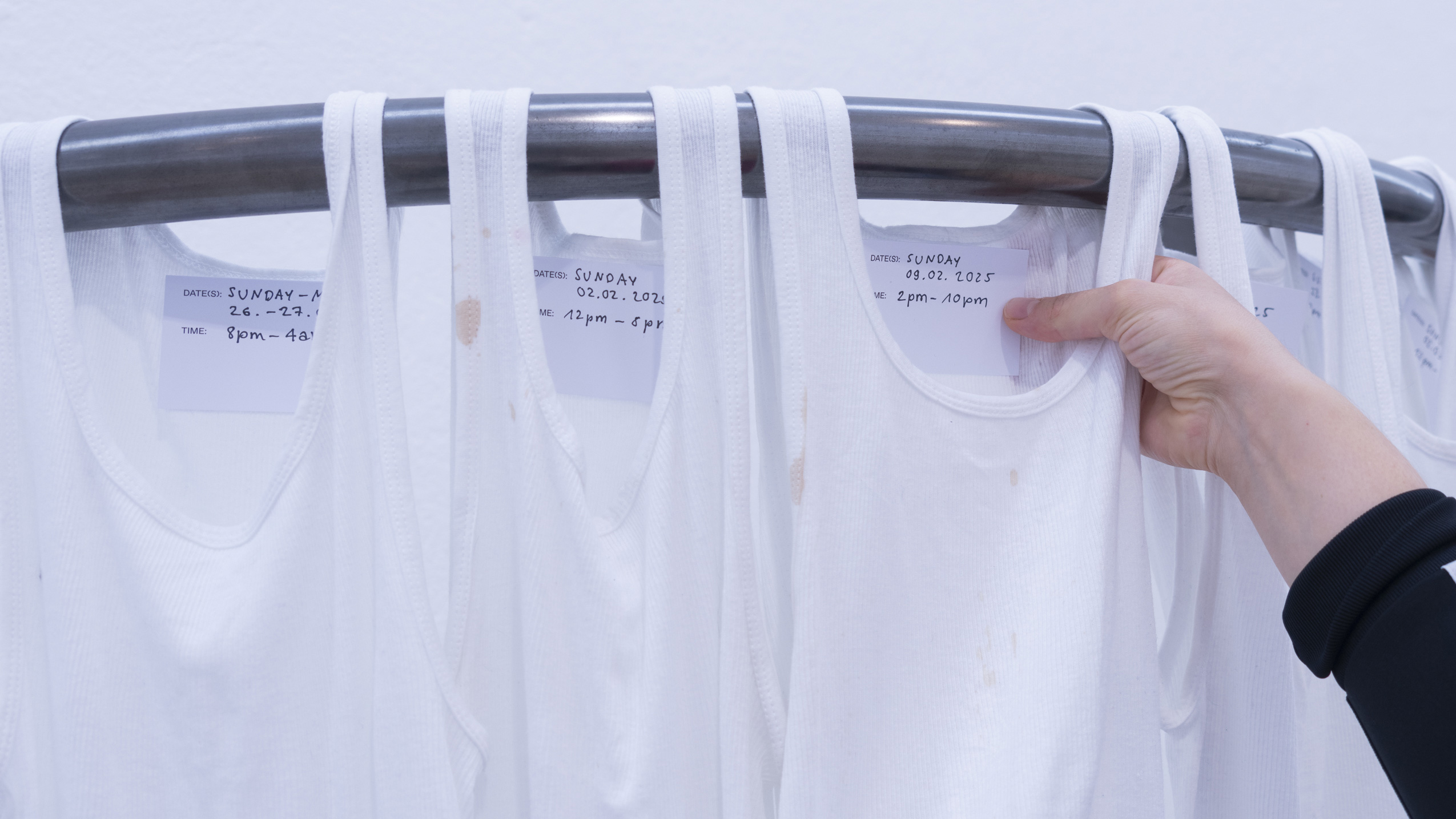
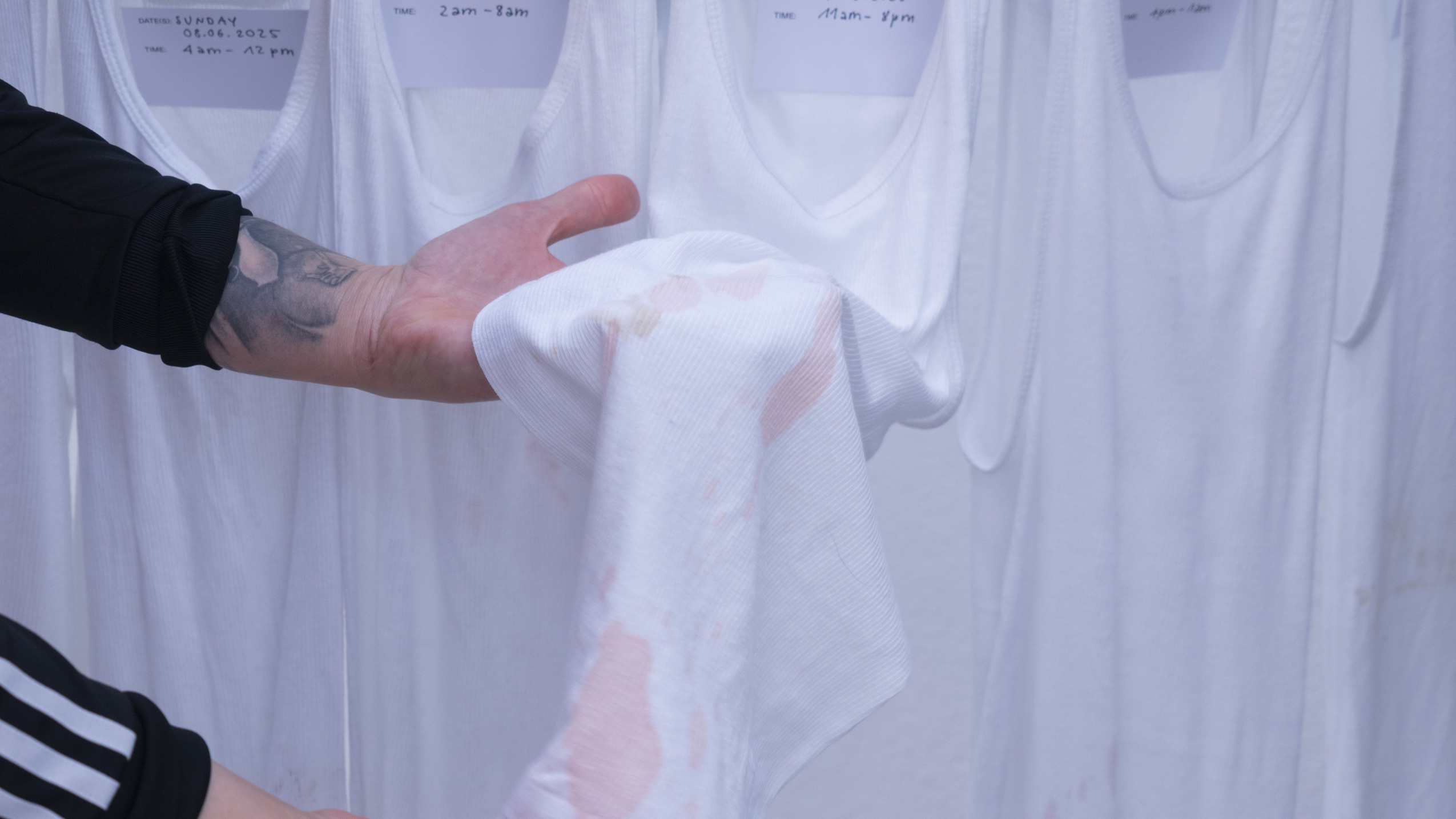
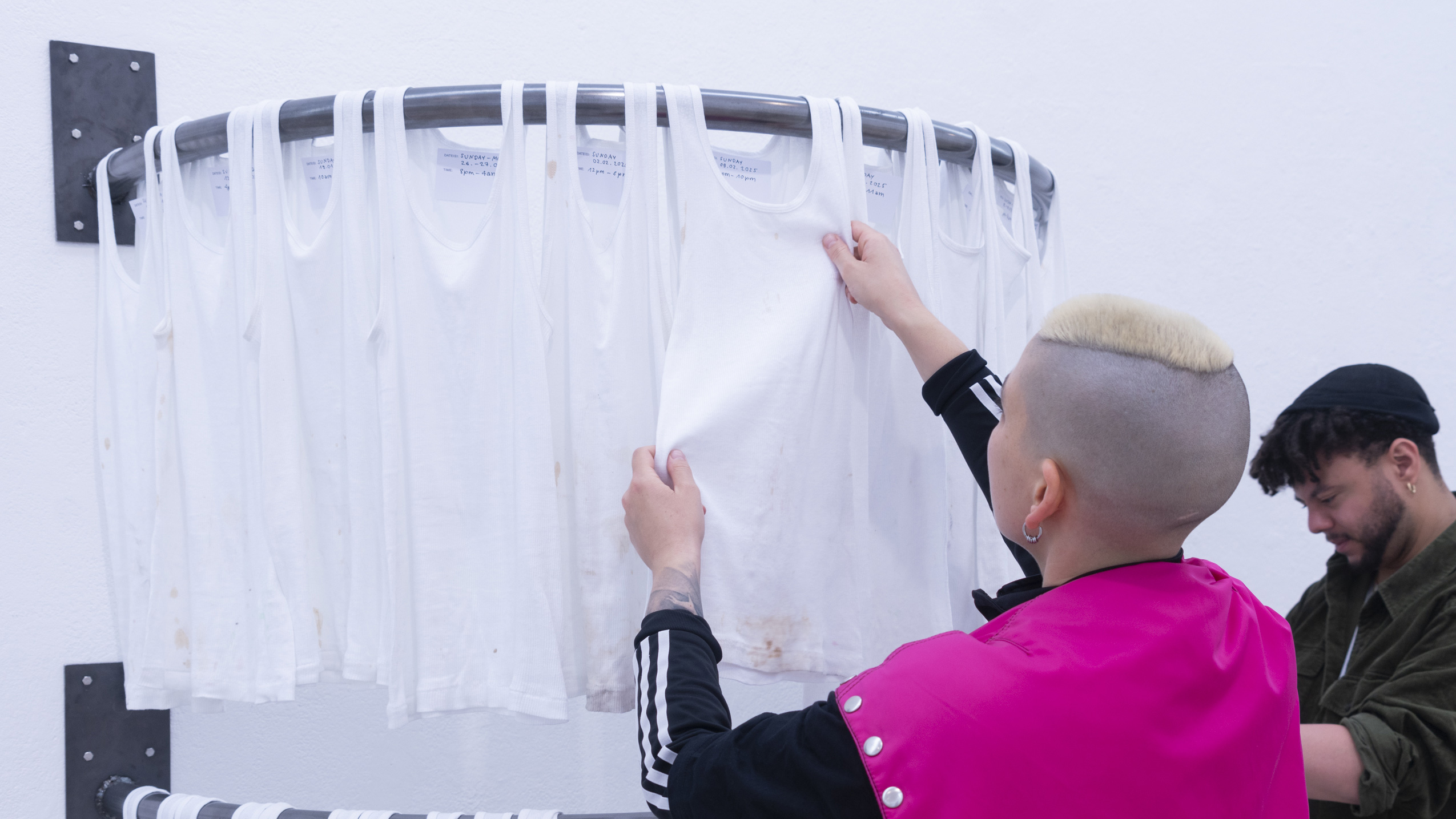
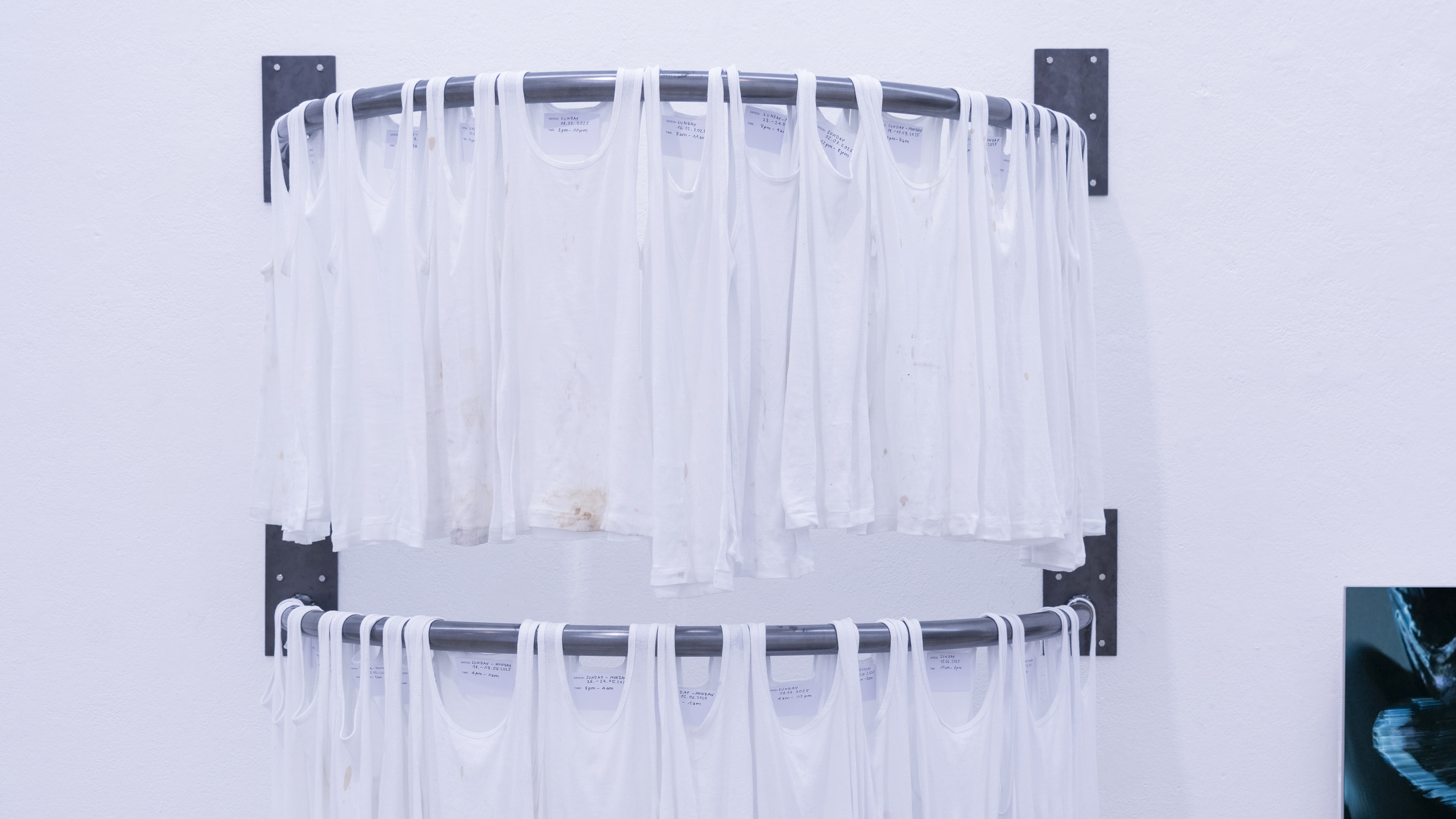
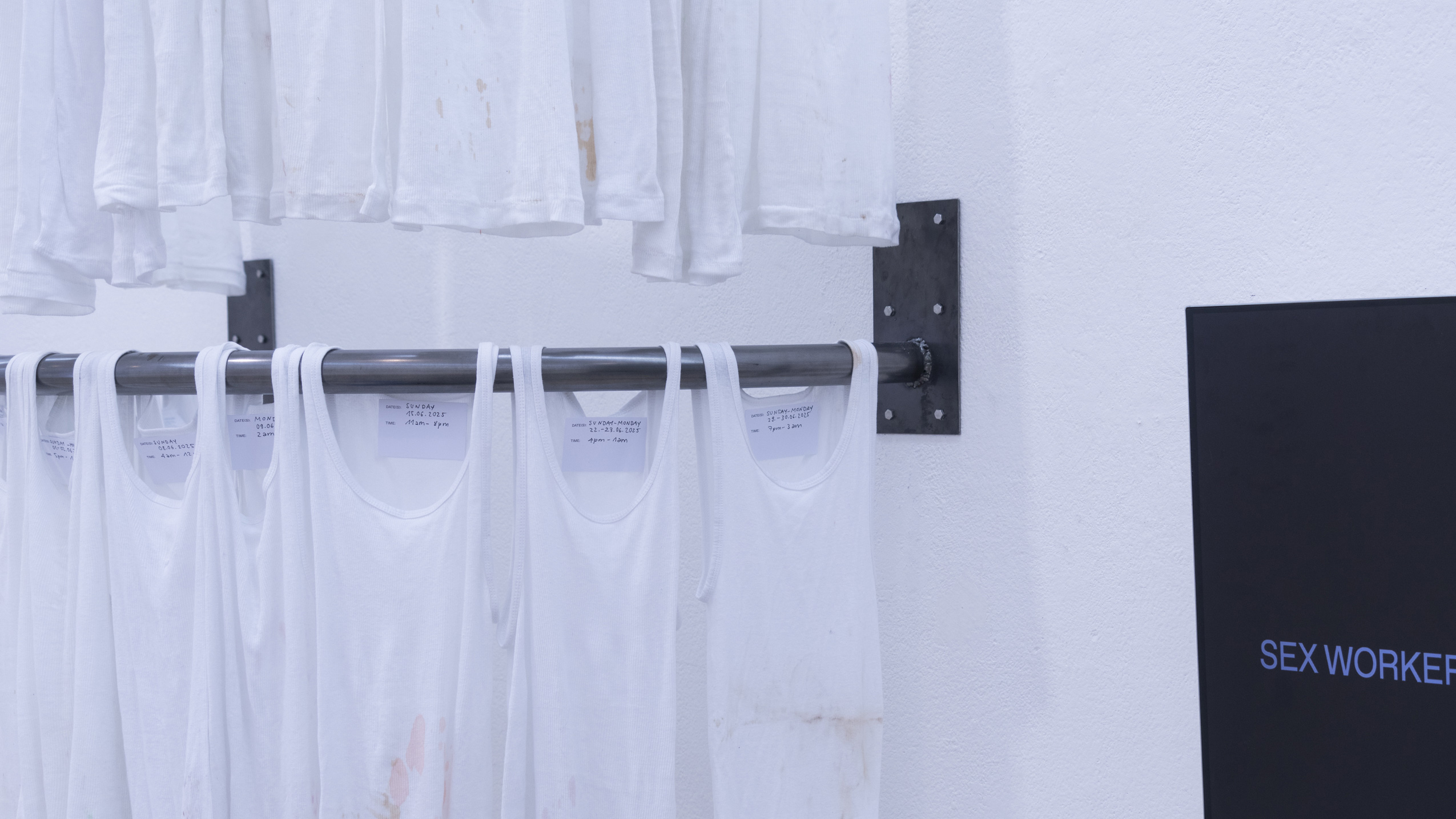
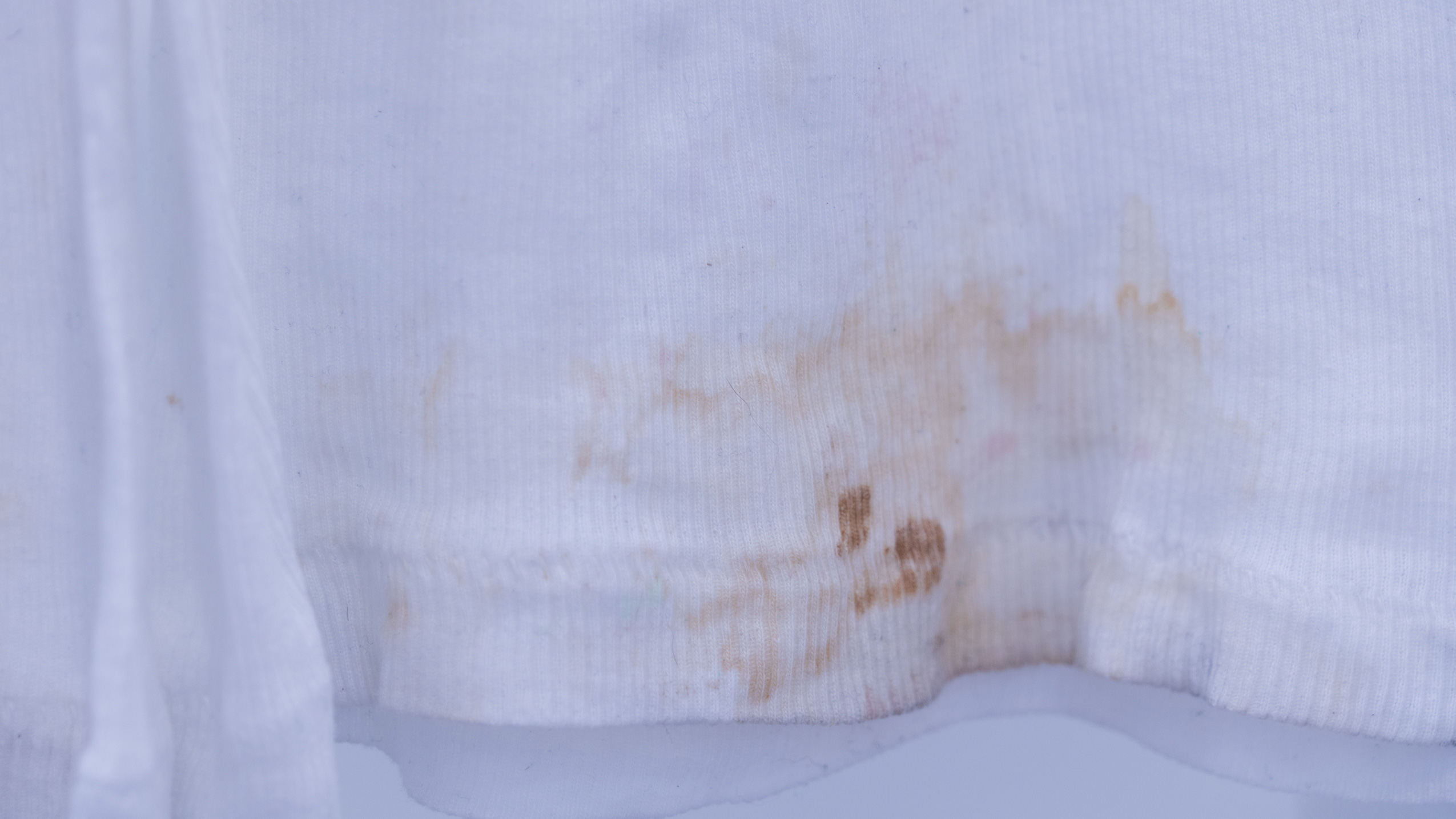
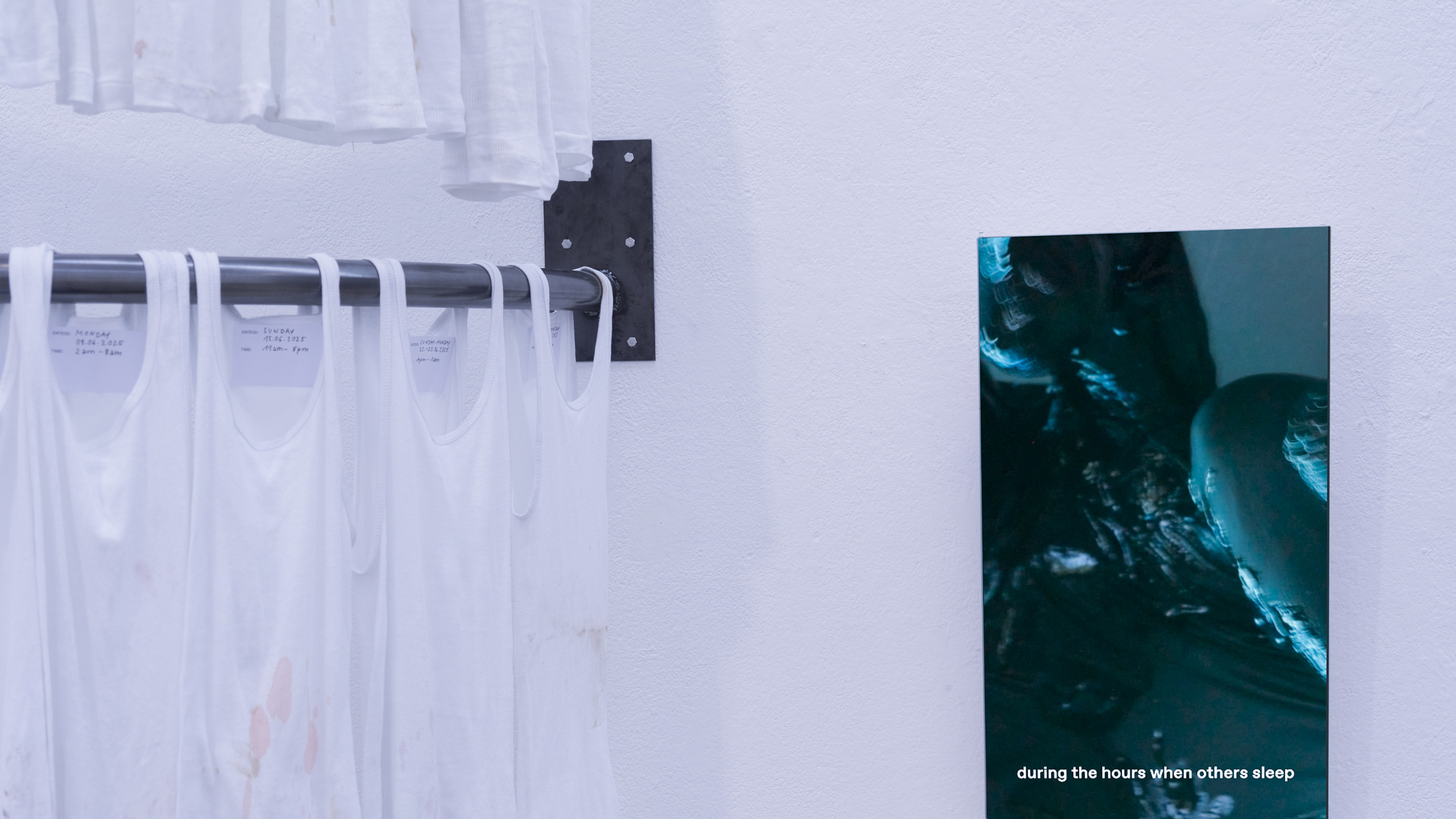
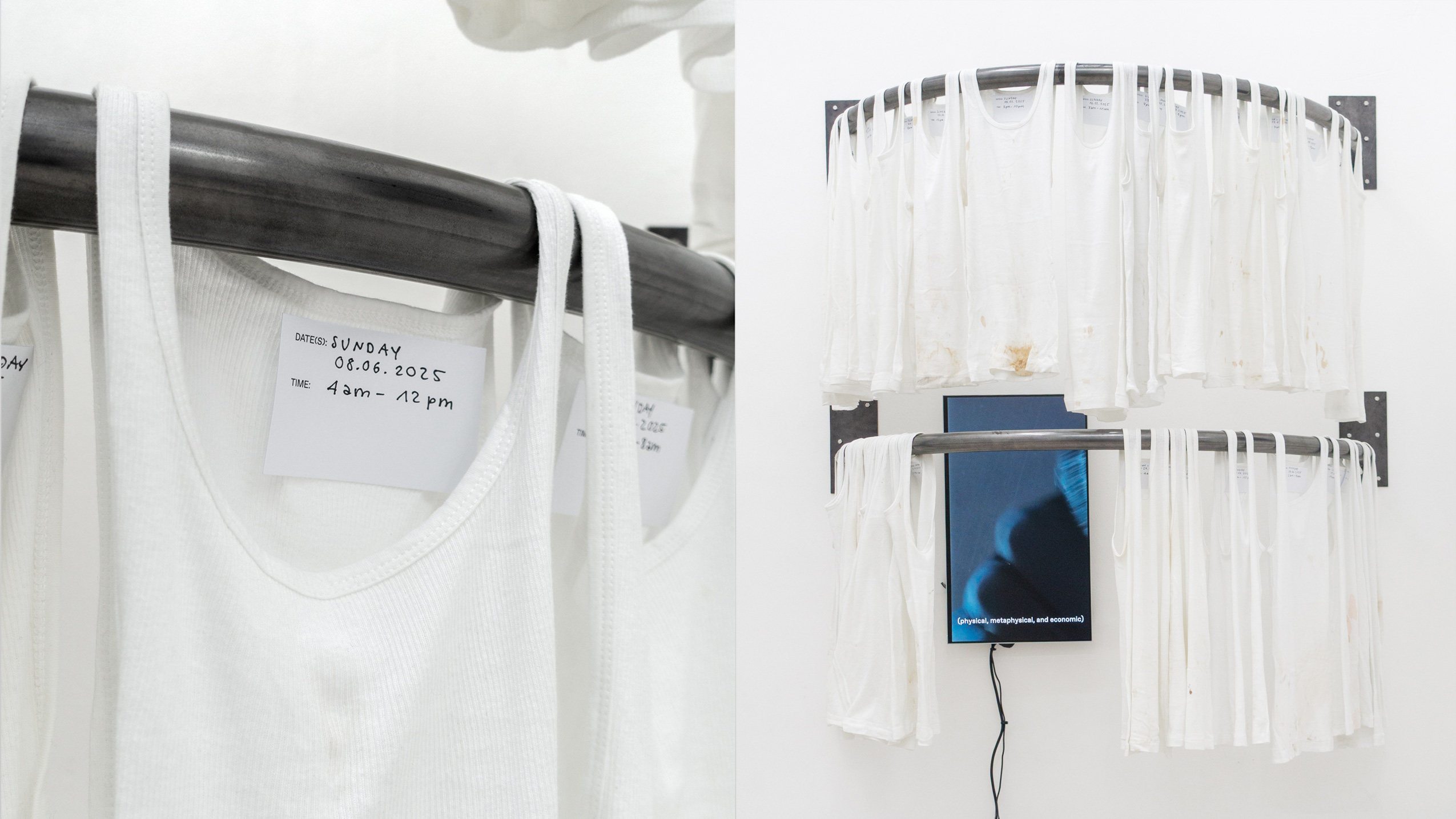
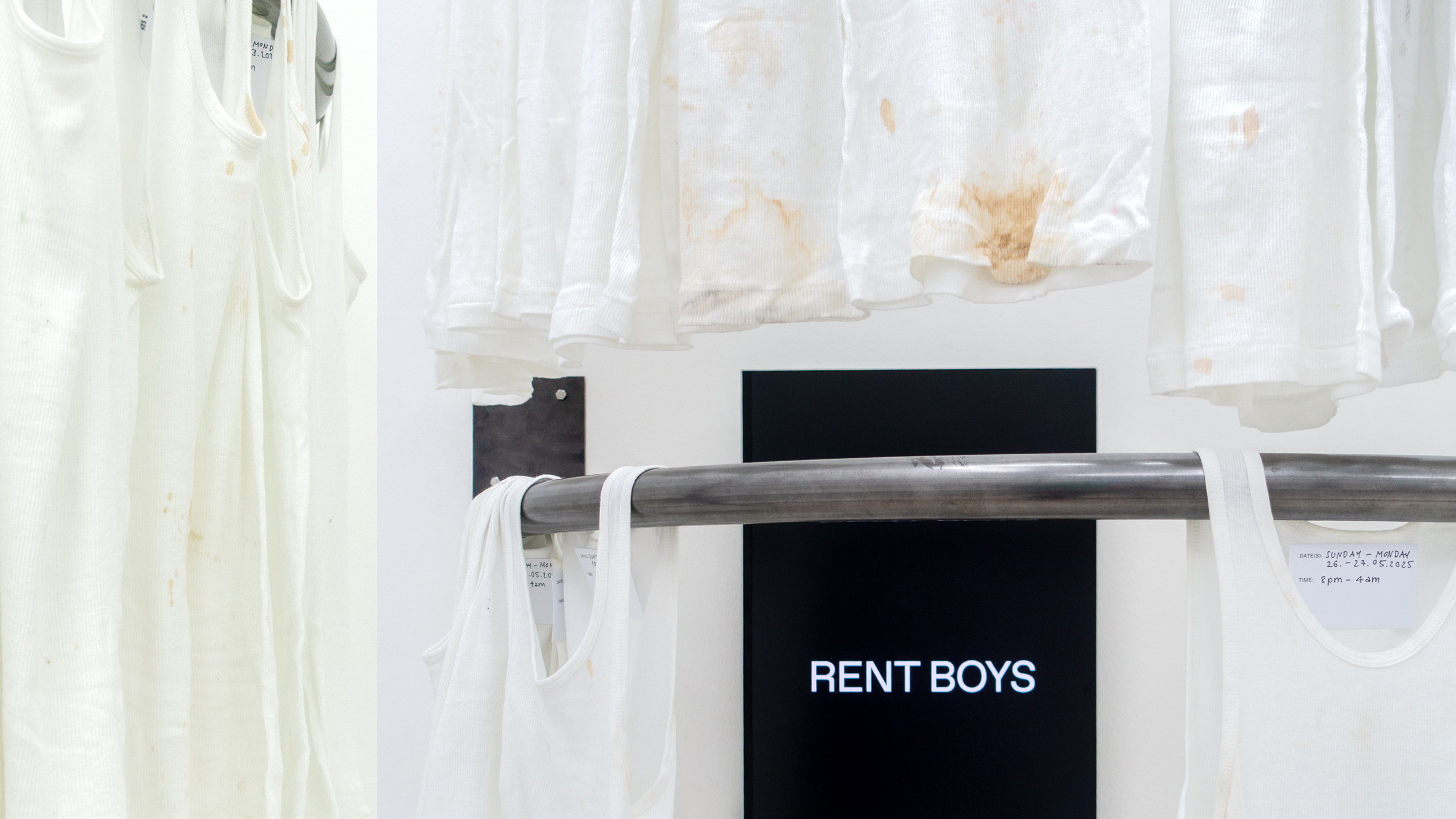
(en) SUNDAY/MONDAY collects 27 standardized, white tank tops (colloquially referred to as wifebeaters) that were worn while working as a bartender at a club. The shifts took place on Sunday and/or Monday, colliding with the temporality and structuring of the week as determined by hegemonic society. The tank tops were collected and archived over a span of six months, between January and June 2025. Each one bears the traces of physical labor, the signs of wear from a shift: dirt, stains, and drink residues on the outside mix with sweat from the inside. They form a personal cartography of subcultural labor and show, in the cultural context, an aestheticized image—another failed attempt at archiving and approaching the raving experience.
The installation references in a video work J. Jack Halberstam’s definitional approach to queer subjects who move at the temporal and spatial margins of heteronormative life. The excluded, the marginalized, the criminalized, unproductive subjects and those who work while others sleep, move through spaces that others have abandoned. Especially for queer clubworkers, these resistant spaces and their sociality exist inextricably between the private and the public, between visibility and invisibility, negotiating a sense of safety that comes with invisibility in hegemonic society. Clubworkers operate in the borderlands—caught between their own entanglement in the system (precarious income and exploited passion) and their collision and confrontation with it.
The video work GLOVES shows close-ups of a slowly moving hand in a black latex glove and the modified Halberstam quote. Latex gloves serve to protect the body. As a working tool for the bar and for the cleaning staff, for many sexworkers and in BDSM practices, the function of the gloves moves between labor and pleasure, simply due to their functionality (waterproof, resistant, tight-fitting). Subcultural objects and codes are frequently transferred onto a cultural and commercial level, aestheticized as trend and fashion, stripped of their functionality and meaning, as empty signifiers of a practice that is not accessible and does not want to be.
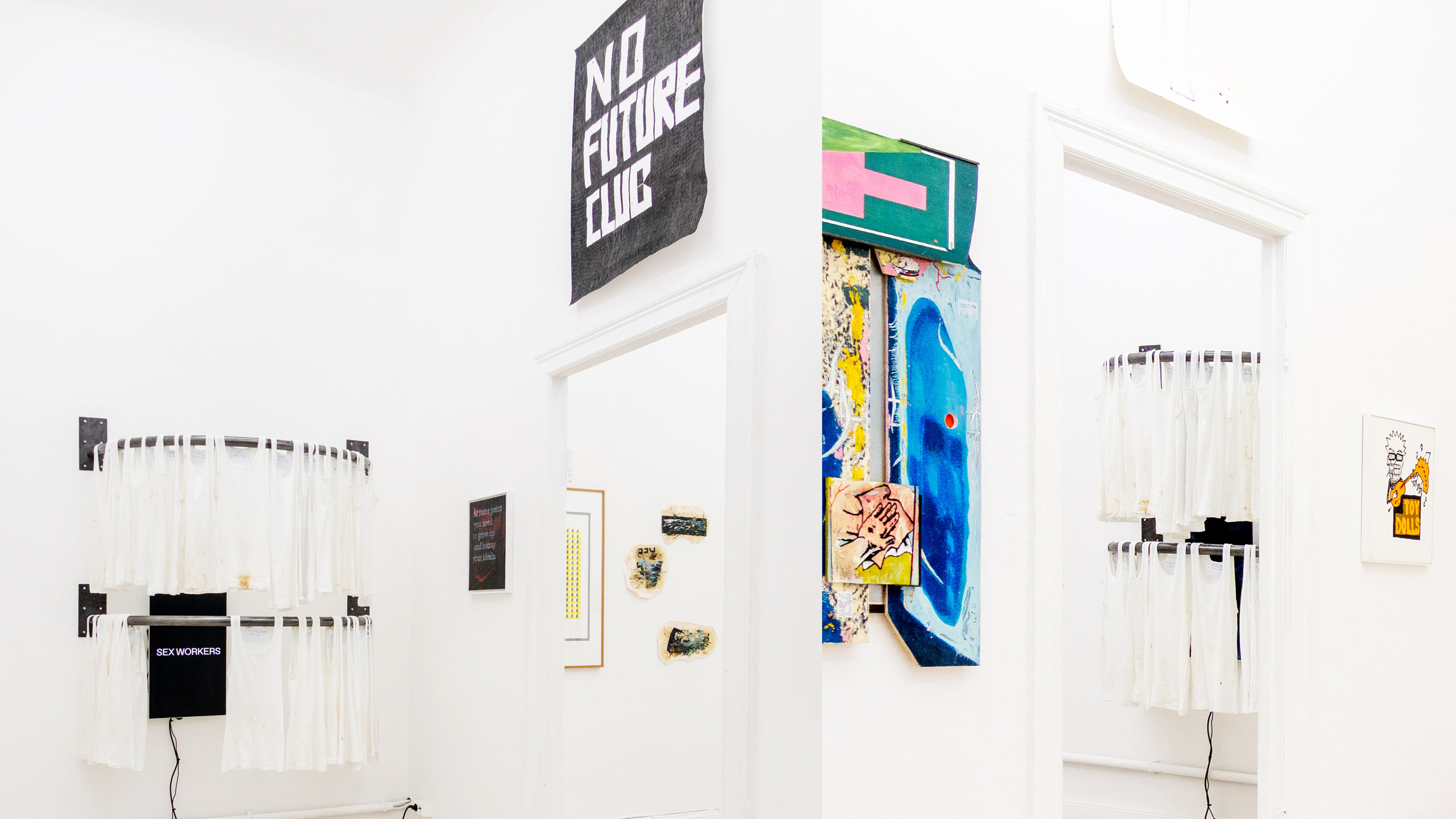
SUNDAY—MONDAY has also been part of the group exhibition VERNISSAGE (exhibition on punk) at Nizza Berlin, curated by J. Schäfer, K. Erdmann and A. Gilbert alongside Antonius Arzt, Hannes Berwing, Tim Bruening, Mark Freeth, Andrew Gilbert, Sue Irion, Magnus Krueger, Jody Korbach, Kang Mao, Genesis P-Orridge,
Kerstin Podbiel, Hank Schmidt in der Beek & Mieke Ulfig, Andi Sex Gang, Aleen Solari, Malte Zenses.
(de) SUNDAY—MONDAY sammelt 27 standardisierte, weiße Tank-Tops (im Slang bezeichnend wifebeater genannt), die bei der Arbeit als Barkeeper im Club getragen wurden. Die Schichten fanden im Zeitraum Sonntag und/oder Montag statt, sie kollidieren mit der durch die hegemonialen Gesellschaft bestimmten Zeitlichkeit und Strukturierung der Woche. Die Tank-Tops wurden über eine Spanne von sechs Monaten zwischen Januar und Juni 2025 gesammelt und archiviert. Jedes trägt die Spuren der körperlichen Arbeit, die Gebrauchsspuren einer Schicht: Schmutz, Flecken und Getränkereste auf der Außenseite vermischen sich mit dem Schweiß von innen her. Sie bilden eine persönliche Kartografie subkultureller Arbeit und zeigen im kulturellen Kontext ein ästetisiertes Abbild, einen weiteren gescheiterten Archivierungs- und Annäherungsversuch an die Raving-Erfahrung.
Die Installation greift in einer Videoarbeit J. Jack Halberstams Definitionsansatz queerer Subjekte auf, die sich an den zeitlichen und räumlichen Rändern heteronormativen Lebens bewegen. Die Ausgeschlossenen, Marginalisierten und Kriminalisierten, unproduktive Subjekte und Subjekte, die arbeiten, zu denen andere schlafen und sich in Räumen bewegen, die andere verlassen haben. Gerade für queere Clubarbeitende liegen diese widerständigen Räume und deren Sozietät untrennbar zwischen Privatem und Öffentlichem, zwischen Sichtbarkeit und Unsichtbarkeit und verhandeln ein Sicherheitsgefühl, das mit Unsichtbarkeit in der hegemonialen Gesellschaft einhergeht. Clubarbeitende bearbeiten die Grenzgebiete – gefangen zwischen ihrer eigenen Eingebundenheit in das System (prekäres Einkommen und ausgebeutete Leidenschaft) und der Kollision und Konfrontation mit ihm.
Die Videoarbeit GLOVES zeigt Close-Ups einer sich langsam bewegenden Hand in einem schwarzen Latexhandschuh und ein modifiziertes Halberstam-Zitat. Latexhandschuhe dienen zum Schutz des Körpers. Als Arbeitsutensil an der Bar und für das Reinigungspersonal, für viele Sexarbeitende und in BDSM-Praktiken bewegt sich die Funktion der Handschuhe zwischen Arbeit und Pleasure, allein aufgrund ihrer Funktionalität (wasserdicht, widerstandsfähig, eng anliegend). Subkulturelle Objekte und Codes werden häufig auf eine kulturelle und kommerzielle Ebene transferiert, als Trend und Mode ästhetisiert und ihrer Funktionalität und Bedeutung beraubt, als leerer Signifikant einer Praxis, die nicht zugänglich ist und sein will.
Sophia Dahlin, Glove Money: ‘I need money to buy gloves / so that I never need again to touch it, / money. In need gloves to separate my hands / from dollars. Also from other hands / when they hand me money, handling / others' money, others' hands, / disgusting. And cold, or hot, and lotion. / To regulate mine own hands' temperatures, / gloves. To buy them, money.’
SUNDAY—MONDAY war Teil der Gruppenausstellung VERNISSAGE (exhibition on punk) bei Nizza Berlin, kuratiert von J. Schäfer, K. Erdmann und A. Gilbert, mit Antonius Arzt, Hannes Berwing, Tim Bruening, Mark Freeth, Andrew Gilbert, Sue Irion, Magnus Krueger, Jody Korbach, Kang Mao, Genesis P-Orridge,
Kerstin Podbiel, Hank Schmidt in der Beek & Mieke Ulfig, Andi Sex Gang, Aleen Solari, Malte Zenses.